Your questions, honest answers
Straight talk about cost, risk, timelines, and what modernization really looks like—from first assessment through launch, with no sales pressure.
Book a Free Assessment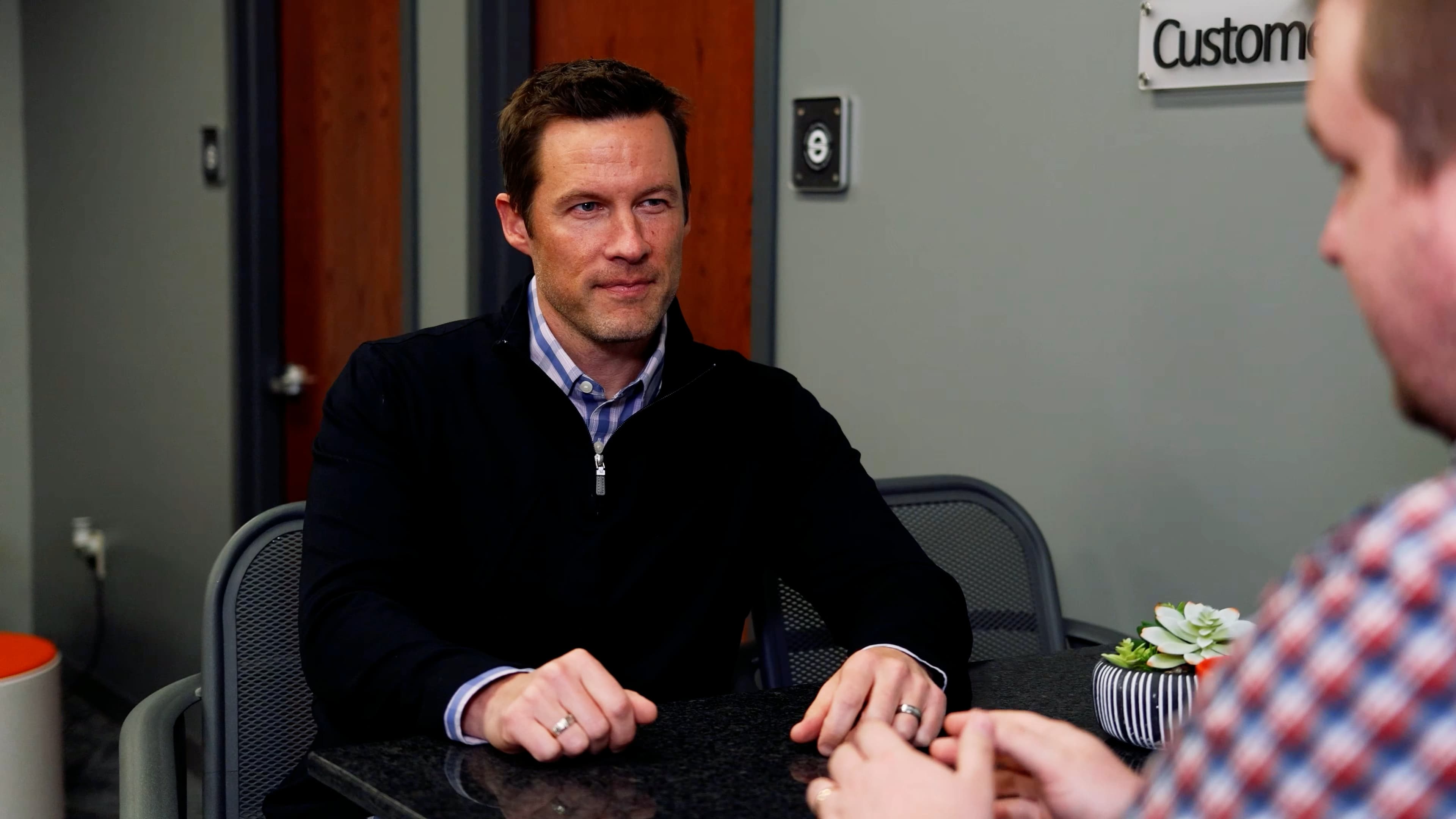
Written by the same team you would work with—not a generic help center.
Filter by topic
All questions
If your software was custom-built more than 10-20 years ago, runs on an older operating system or framework, requires institutional knowledge to operate that only one or two people hold, and can't easily connect to newer tools your business uses — it's legacy. Age alone doesn't define it; the real signal is when the system starts slowing your team down more than it helps them move.
"It still works" is what people say right up until it stops working. But the real costs aren't just in the software breaking; they're in the time your team wastes working around its limitations, the manual steps that should be automated, the reports you can't run, the integrations you can't make, and the security vulnerabilities you can't patch. Companies on average spent 40% of their IT budgets maintaining technical debt—money spent keeping the lights on rather than growing the business.
Joe Sandin, our CEO, walks through this exact question in a short video — watch him explain why "it still works" isn't the right question.
The maintenance invoice is the smallest part. The real costs are hidden: productivity loss from workarounds and manual data entry, security exposure from unpatched systems, compliance risk, the inability to hire younger developers who won't work on outdated code, and the competitive gap that widens every quarter you delay. Research from IBM's Cost of a Data Breach report found that the average cost of a financial data breach reached $6.08 million in 2024 — and outdated systems were shown to have three times as many vulnerabilities as modern environments.
Up to 75% of IT spending in large companies goes toward maintaining legacy systems, with minimal resources allocated to innovation. Even for smaller businesses, the ratio is often surprising — most organizations don't realize how much staff time, workarounds, and vendor support charges are tied to keeping old software alive rather than improving operations.
Every year of delay compounds the problem. Technical debt grows. The pool of developers who know older languages and frameworks shrinks. Security vulnerabilities accumulate. And your competitors who have already modernized pull further ahead. High-performing teams on modern software deploy new features multiple times per day, while legacy-constrained teams measure deployments in months, meaning a modernized competitor can run 200 experiments to market for every one you try. The cost of inaction isn't zero; it's just invisible on a budget line.
Modernizing aging software is a big project, and it does require a meaningful investment. The good news is that recent AI advancements have made modernization more realistic for many companies.
In the past, a project like this might have cost anywhere from $500,000 to $3 million. Today, many modernization projects can land closer to the $250,000 to $1 million range.
That's still a broad estimate, of course. The actual cost depends on how complex your current system is, what needs to be rebuilt or improved, and how many integrations or custom features are involved. We usually recommend starting with a discovery process so we can understand what you have today and help map out the best path forward.
Modernization can take different forms, but at Onsharp, our focus is rebuilding outdated systems with modern technology designed for today's business needs. Rather than making changes to aging codebases, we create new, scalable software that preserves the workflows and functionality your business depends on while improving performance, usability, integrations, and long-term maintainability. Depending on your goals, that rebuild can happen all at once or through a phased rollout strategy. The right approach starts with understanding how your business operates, what challenges the current system creates, and what you need the future system to support.
Off-the-shelf software (ERPs, SaaS platforms) is built for the average business in your category. Custom software is built for your business specifically — your workflows, your data, your competitive edge. When companies that depend on unique processes try to force-fit into an ERP, they either spend years customizing it (often costing more than a rebuild) or they change how they operate to match the software. Modernizing your custom software preserves what makes your business work and updates the parts that are holding you back.
Yes. In many cases, a phased approach allows businesses to reduce disruption and spread risk over time instead of relying on a single "go-live" event. We can prioritize the most critical functionality first, introduce new systems in stages, and create a transition plan that aligns with your operations and business goals. Every situation is different, so during the assessment process we'll give you a clear recommendation on the approach that makes the most sense for your business, timeline, and long-term objectives.
Legacy software modernization often delivers ROI through lower maintenance costs, improved operational efficiency, reduced downtime, and the ability to support new business capabilities. Many organizations begin seeing measurable benefits early in the process as manual work is reduced, reporting improves, and employees spend less time working around system limitations.
The timeline and return depend on your current system, operational challenges, and business goals. During the assessment process, we can help you build a business case based on your specific costs, risks, and opportunities.
We can work with whatever your current system was built in, especially when we're modernizing or replacing older software. Whether your existing system uses an older framework, a custom database setup, or a mix of technologies, we can evaluate it and help move things forward.
For the new system, we build on the Microsoft tech stack. That typically means using technologies like .NET, C#, SQL Server, and Microsoft Azure, along with other modern tools as needed.
This gives our clients a reliable, scalable, and well-supported foundation for the future while still allowing us to understand and work with the system they already have today.
This is the fear behind most delayed modernization decisions — and it's a legitimate one. Our process addresses it directly: we run old and new systems in parallel until the new one is validated, we never delete data until it's confirmed migrated and verified, and we plan go-live events around your operational calendar, not ours. We've done this for businesses where the software is running every day and downtime isn't an option.
That's one of the most common situations we walk into. Over years, systems accumulate undocumented logic, one-off rules, and workarounds that nobody wrote down. Part of what we do in the assessment phase is map how your system actually works — not just how it was originally designed. We interview your team, trace the data flows, and document what needs to be preserved before a single line of new code is written.
This is one of the most urgent reasons to act. 42% of critical business logic in legacy systems is at risk when key personnel leave, because "the system is the documentation" in most legacy environments. When that person walks out the door, the institutional knowledge walks with them. Modernization captures that knowledge in well-documented, maintainable code that any qualified developer can work with.
Many development companies and offshore teams operate on a staff augmentation model, they provide developers by the hour, while you manage the project. We are a project delivery firm: we take ownership of the outcome, not just the hours. You work with one team, one point of contact, and leadership that stays accessible throughout the engagement. Based in the Midwest, we understand the businesses we serve, and we've been building and supporting custom software solutions for more than 25 years. You're not just another ticket in a queue—you have a long-term technology partner invested in your success.
It means we understand the full picture — what these older systems were built to do, why decisions were made the way they were, and what it actually takes to replace them without breaking what works. Our current team builds on modern stacks. Our experience with legacy systems means we translate between the old and the new without losing anything critical in the process.
Our sweet spot is established mid-size businesses — roughly 20 to 500 employees — that built custom software more than a decade ago and have outgrown it. We work across manufacturing, distribution, professional services, and other operationally complex industries. We're not the right fit for enterprise Fortune 500 engagements or early-stage startups. If you're somewhere in between and your software is holding your operations back, that's exactly who we built this practice for.
No. We focus on rebuilding outdated systems with modern technology, but that does not always mean replacing everything at once. In many cases, the right approach is a phased rebuild that prioritizes the most critical functionality first and expands over time.
Our recommendation is based on what will best support your business goals, operations, and long term success. During the assessment process, we will give you a clear and honest perspective on the scope, priorities, and approach that make the most sense for your situation.
The first step is a conversation, not a commitment. Tell us about your system, how it's affecting your business, and what you're hoping to change. From there we'll determine whether a Legacy Software Assessment makes sense, what it would involve, and what you'd walk away with. There's no obligation and no sales pressure, just an honest conversation about whether we're the right fit for your situation.
Still have questions?
Connect with our team for honest guidance and practical answers.